

Get Free Sample
Join our newsletter and start saving!
Welcome To Geedyn Silicone!
Tel: +8613600280837
Email: service@geedyn.com
A practical framework for retailers, wholesalers, brand owners, importers, and promotional product buyers who need to evaluate custom Halloween product suppliers with greater confidence.
By Geedyn SiliconeB2B Manufacturing InsightsEstimated Reading Time: 13 Minutes
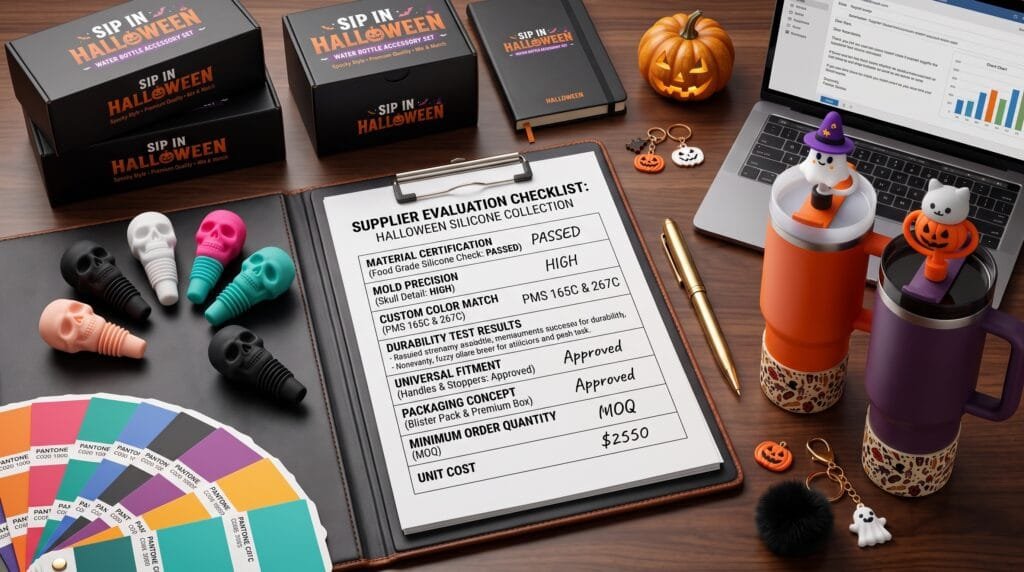
Halloween is a high-impact but time-sensitive retail season. For many businesses, a successful Halloween collection must do more than look creative. It needs to arrive before the selling window, meet market-specific requirements, reflect the buyer’s brand identity, and maintain consistent quality across the full order.
That is why choosing a supplier for custom Halloween products should not be treated as a simple price comparison. The right manufacturing partner can help turn an early concept into a market-ready product. The wrong supplier may create delays, inconsistent quality, unexpected costs, or inventory that reaches the market after peak demand has already passed.
Whether you are sourcing custom silicone cup accessories, themed promotional gifts, reusable household products, pet accessories, seasonal novelty items, or private-label Halloween collections, supplier selection should be based on a structured evaluation process.
Halloween sourcing differs from year-round purchasing because the sales period is concentrated. Retailers and brands generally have a limited opportunity to introduce new products, replenish inventory, and convert seasonal demand into revenue. A delay that might be manageable for an evergreen product can have a much larger commercial impact when the product is intended for a specific holiday.
Supplier selection therefore affects more than unit cost. It can influence product launch timing, brand reputation, inventory risk, customer satisfaction, and the ability to respond to market demand.
A custom Halloween product usually passes through several stages before it is ready for sale: concept development, design confirmation, material selection, tooling when required, sample approval, production, quality inspection, packaging, and shipping.
If one stage is delayed, the entire schedule can move. For this reason, buyers should evaluate a supplier’s planning discipline and communication process—not only the estimated production lead time stated in a quotation.
B2B sourcing insight: A supplier should be able to explain the critical path of the project, identify potential timing risks, and provide realistic milestones for sampling, production, inspection, and shipment.
Halloween products are often purchased because of visual appeal, novelty, collectability, or gifting value. Small inconsistencies can be highly visible. Uneven colors, weak details, poor printing, rough edges, unstable assembly, or inaccurate logo reproduction may reduce the perceived value of the entire collection.
For custom silicone products, buyers may also need to review material specifications, hardness, surface texture, color consistency, dimensional tolerances, and the performance of any attached components. A qualified supplier should understand how product design and manufacturing processes affect the final result.
Many Halloween collections compete in crowded retail categories. A supplier that only provides standard products may limit a buyer’s ability to create a distinctive offering.
Strong customization capability can support branded colors, custom shapes, embossed or debossed logos, multi-color details, themed textures, custom packaging, and coordinated product sets. These options can help transform a basic seasonal item into a recognizable private-label product.
At Geedyn Silicone, custom product development can be supported through design, sampling, molding, production, quality control, packaging, and delivery coordination. This integrated approach is particularly useful when buyers want to develop Halloween products that combine functional silicone components with distinctive seasonal styling.
A low unit price may appear attractive during the quotation stage, but sourcing costs extend beyond the initial purchase price. Additional expenses can result from rework, failed inspections, inconsistent products, packaging changes, delayed shipments, replacement orders, or poor communication.
A more reliable supplier may provide greater value when quality systems, engineering support, production stability, and delivery management reduce avoidable risk.
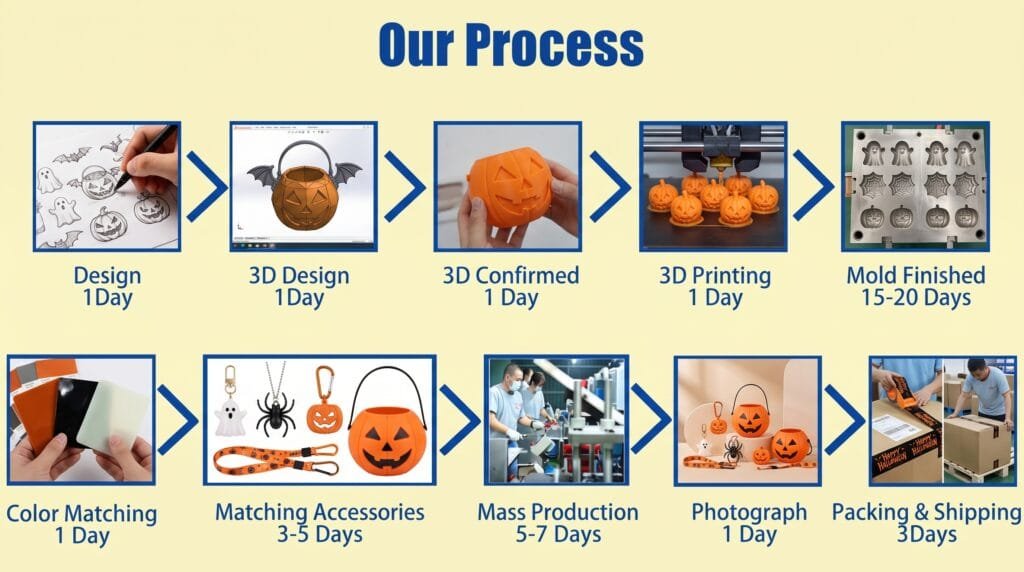
Supplier selection becomes more accurate when buyers define their requirements before requesting quotations. A detailed sourcing brief reduces ambiguity and allows suppliers to provide more relevant feedback.
Your brief does not need to include every engineering detail at the beginning. However, it should communicate enough information for a supplier to understand the intended product, commercial objectives, and expected order conditions.
The clearer the sourcing brief, the easier it is to compare suppliers on a like-for-like basis. It also helps reveal which suppliers are asking useful technical questions and which are simply providing generic quotations.
Practical tip: Ask suppliers to confirm any assumptions they make when quoting. This reduces the risk that two quotations appear comparable while being based on different materials, packaging levels, quality standards, or production conditions.
A strong supplier evaluation should combine commercial, technical, operational, and relationship factors. The following criteria provide a practical framework for B2B buyers.
Begin by reviewing whether the supplier has experience with products that are similar in material, complexity, function, or market positioning. Experience with seasonal products can also be valuable because these projects often require careful schedule management and rapid product development.
Ask to see examples of comparable work, but do not rely only on polished product images. Request information about the development process, production method, customization options, and quality controls used for similar projects.
A supplier should be able to explain how it supports custom projects. Some buyers require only a logo or color change, while others need a new product shape, original tooling, functional improvements, or a complete private-label solution.
Evaluate whether the supplier can support concept review, design refinement, material recommendations, mold development, prototyping, sample revisions, and production engineering.
For silicone-based Halloween products, different manufacturing processes may be suitable depending on the design. Buyers should ask how the proposed process will influence product detail, color application, durability, tooling cost, and production efficiency.
Geedyn supports multiple silicone manufacturing solutions, including silicone compression molding and multi-color silicone dripping injection. These capabilities can help buyers evaluate different approaches for custom shapes, layered details, decorative effects, and branded product designs.
Material requirements should be reviewed according to the product category and intended market. Buyers should confirm the material grade, applicable regulations, testing needs, and any restrictions related to product use.
For example, a decorative silicone accessory, a food-contact item, a children’s product, and a pet product may require different documentation or testing considerations. A responsible supplier should not provide a generic compliance statement without understanding the product application.
Ask for relevant material information, available test reports, certification details, and clarification regarding whether documents apply to the material, the product, or a specific production configuration.
Samples are one of the most important checkpoints in a custom sourcing project. They allow buyers to assess appearance, fit, function, color, texture, dimensions, packaging, and overall market readiness.
Review not only the first sample but also how the supplier manages feedback. A capable partner should document requested changes, clarify technical concerns, and provide a controlled revision process.
Before approving mass production, confirm which sample will serve as the reference standard. This can help align expectations between the buyer, production team, and quality-control team.
Capacity is not simply the number of products a factory can produce in a month. Buyers should also consider how capacity is allocated, whether the supplier can manage peak-season demand, and how production schedules are adjusted when order volumes change.
Ask about production lines, equipment, workforce organization, order scheduling, and the supplier’s approach to urgent or repeat orders. A factory with strong production resources may still experience delays if planning systems are weak.
Geedyn provides information about its manufacturing operations and one-stop production capabilities through its company profile. Buyers can also discuss project-specific capacity requirements directly before confirming an order.
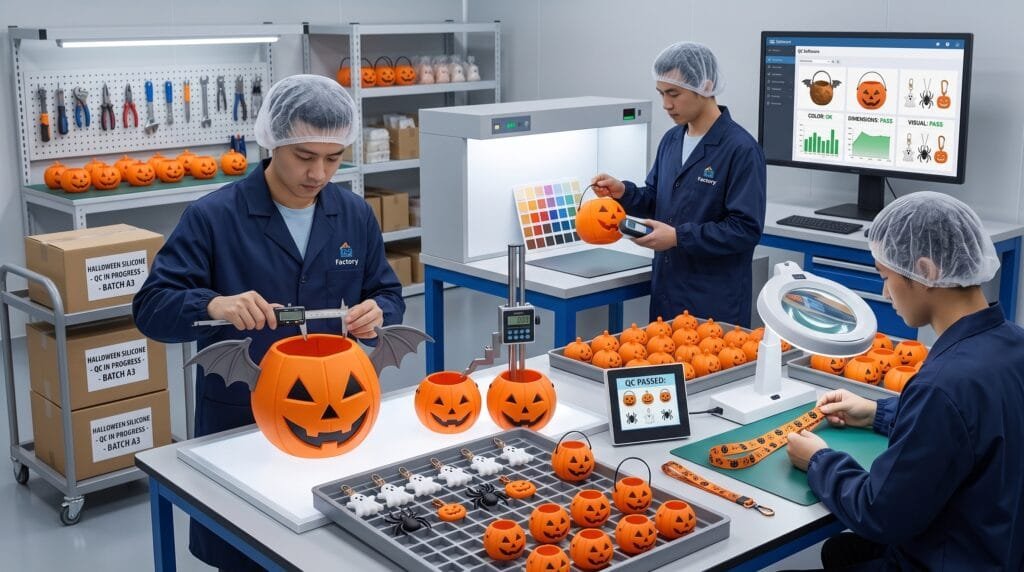
Quality control should be evaluated as a process rather than a final inspection event. Ask how the supplier checks incoming materials, first production pieces, in-process products, finished goods, and packaging.
A useful quality discussion may include:
Buyers should also ask how quality issues are documented and resolved. A supplier’s response to a problem can be as important as its ability to prevent the problem.
For Halloween projects, the most useful lead-time estimate is not a single number. Buyers should request a stage-by-stage schedule that separates product development, tooling, sampling, approval, production, inspection, packaging, and shipping preparation.
Suppliers should also identify which milestones depend on buyer approval. Delays in artwork confirmation, sample feedback, or packaging approval can affect the final delivery date.
When comparing suppliers, evaluate whether the proposed schedule is realistic. An unusually short promise may be less valuable than a transparent schedule with clear responsibilities and risk controls.
Custom projects involve many decisions. The supplier should be able to communicate technical information clearly, respond to questions efficiently, and maintain organized project records.
During the quotation and sampling stages, observe whether the supplier asks relevant questions, identifies potential risks, confirms important details in writing, and provides practical recommendations.
Communication quality is often an early indicator of how the supplier will perform after the purchase order is placed.
Minimum order quantity should be evaluated alongside tooling cost, unit price, packaging requirements, development fees, and future reorder conditions.
A low MOQ may be helpful for testing a new Halloween collection, but buyers should understand whether the order size changes the unit cost, color options, production method, or customization level.
Ask suppliers to explain the quotation structure clearly. A transparent quotation should identify major cost assumptions and distinguish recurring production costs from one-time development expenses.
The final evaluation should consider what happens after the first order. Can the supplier support new designs, repeat orders, product upgrades, seasonal expansions, packaging changes, and forecast-based production planning?
A supplier that understands your brand strategy can provide more relevant recommendations over time. This may create operational value that is difficult to measure in an initial quotation.
To reduce subjective decision-making, buyers can assign weighted scores to each supplier. The weighting should reflect the priorities of the project.
For a highly time-sensitive Halloween launch, lead-time reliability may deserve a higher weight. For a premium private-label collection, product development and quality management may be more important.
| Evaluation Area | Suggested Weight | Questions to Ask |
|---|---|---|
| Customization and Engineering | 15% | Can the supplier support original designs, tooling, sample revisions, logos, colors, and packaging? |
| Product Quality | 15% | How are materials, production quality, and finished products inspected? |
| Production Capacity | 10% | Can the supplier support the required quantity within the requested production window? |
| Lead-Time Reliability | 15% | Is the schedule detailed, realistic, and supported by clear milestones? |
| Compliance and Documentation | 10% | Can the supplier provide relevant material information, certifications, and test documentation? |
| Communication | 10% | Are responses clear, timely, technically useful, and documented? |
| Commercial Terms | 10% | Are pricing, MOQ, tooling, packaging, and payment assumptions transparent? |
| Long-Term Partnership Value | 15% | Can the supplier support repeat orders, new collections, product improvements, and growth? |
How to use the scorecard: Score each supplier from 1 to 5 for every category, multiply the score by the assigned weight, and compare the total results. Use the score as a decision-support tool—not as a replacement for sample testing, supplier verification, or commercial due diligence.
Supplier verification should include more than reviewing a website or receiving a quotation. Buyers should collect evidence that supports the supplier’s stated capabilities.
Review the company’s product categories, manufacturing processes, facilities, quality systems, and service scope. Determine whether the supplier operates as a manufacturer, a trading company, or a combination of both.
Buyers should also confirm whether the supplier’s stated capabilities are relevant to the proposed Halloween product.
Depending on the product and market, request relevant certificates, audit information, material documentation, test reports, or quality-management records.
Check the document scope and validity. A certificate associated with a facility may not automatically confirm that every product meets every market requirement.
An on-site factory visit can provide direct insight into equipment, production organization, material handling, quality-control practices, and working conditions.
If an in-person visit is not practical, a live remote factory review may help buyers examine production areas, equipment, quality stations, and packaging operations.
Geedyn provides factory information and customer support through its FAQ page, and buyers may discuss project-specific verification requirements before moving forward.
Do not approve a sample based only on general appearance. Create a structured review that includes dimensions, color, material feel, surface quality, functionality, assembly, logo accuracy, packaging, and any product-specific requirements.
Record approval comments in writing. If changes are required, confirm whether a revised sample is necessary before production.
Before placing the order, confirm the production schedule, quality standards, inspection method, packaging requirements, shipment plan, and responsibilities for approvals.
A written project plan can reduce misunderstandings and create a clear reference if unexpected issues occur.
Not every concern means that a supplier is unsuitable. However, repeated inconsistencies or a lack of transparency may indicate a higher sourcing risk.
Important: A supplier that identifies risks early may be more trustworthy than one that promises to accept every request without asking questions. Professional sourcing partners should be willing to explain technical limitations and propose workable alternatives.
Supplier selection should not end when the first purchase order is issued. The strongest B2B relationships become more efficient over time because both sides gain a better understanding of product standards, brand expectations, sales cycles, and operational priorities.
Even an approximate forecast can help a supplier plan materials, production capacity, and development resources. Early visibility may also support better production scheduling during busy periods.
Buyers do not need to provide confidential sales information. A broad estimate of expected volume, product expansion plans, or target launch timing can still improve planning.
Maintain organized product files that include approved drawings, color references, material requirements, logo artwork, packaging details, inspection criteria, and approved samples.
This documentation helps maintain consistency when products are reordered or when new team members join the project.
After the Halloween sales cycle, review supplier performance with measurable criteria:
Long-term suppliers may provide more relevant ideas because they understand the buyer’s product range and target market. Collaboration can lead to improved functionality, new seasonal designs, more efficient manufacturing, or coordinated product collections.
For example, a Halloween collection may evolve from a single themed accessory into a matching set that includes silicone cup boots, straw toppers, carrying accessories, decorative charms, or branded packaging.
Buyers can explore Geedyn’s broader custom silicone product portfolio to identify opportunities for coordinated product development across multiple categories.
A long-term partnership should become more effective with every project. Track recurring quality concerns, development delays, packaging issues, and communication bottlenecks. Then convert those lessons into updated specifications and operating procedures.
Continuous improvement can help both the buyer and supplier reduce unnecessary work while increasing product consistency.
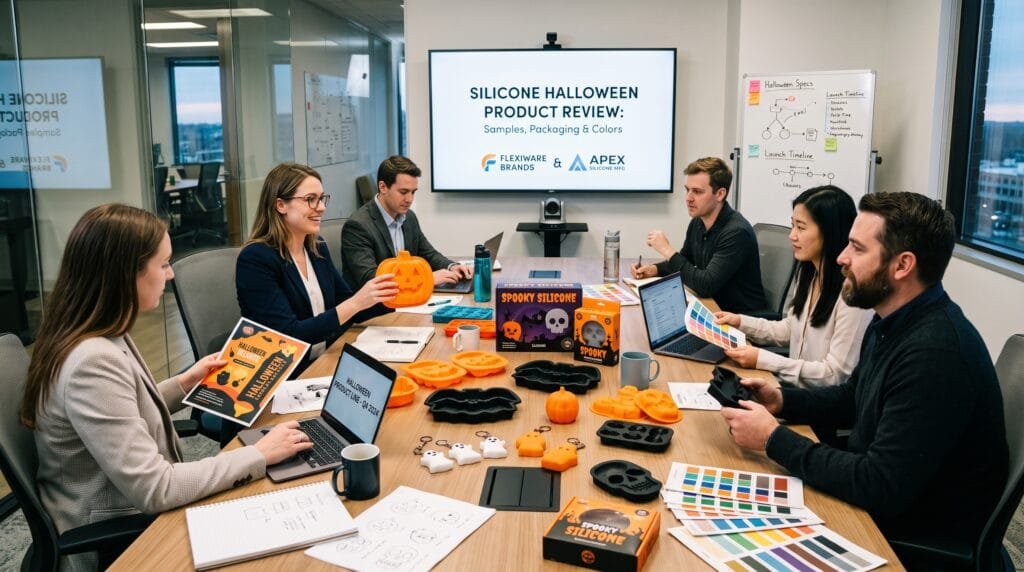
Choosing a supplier is ultimately about finding a partner whose capabilities align with your product goals. For buyers developing custom silicone Halloween products, the supplier should be able to connect creative design requirements with practical manufacturing solutions.
Geedyn Silicone provides one-stop support for customized silicone product projects, including product development, design support, mold development, sampling, mass production, quality control, packaging, and delivery coordination.
Depending on the project, Geedyn can support customization such as:
Buyers who are planning a new seasonal collection can also review Geedyn’s Halloween-related product content and manufacturing insights for additional inspiration.
Planning a custom Halloween project? The earlier product requirements are shared, the more time is available for design review, sampling, revisions, production planning, and shipment coordination.
Start as early as possible. The required timeline depends on product complexity, tooling needs, sample revisions, order quantity, packaging, testing, and shipping method. Custom projects generally require more preparation than standard products.
There is no single factor for every project. However, buyers should prioritize a balanced combination of customization capability, quality management, lead-time reliability, communication, compliance support, and long-term partnership potential.
Not necessarily. Compare the complete offer, including materials, customization, tooling, samples, quality standards, packaging, production lead time, and delivery conditions. The lowest unit price may not provide the lowest total sourcing cost.
Evaluating three to five qualified suppliers is often enough to compare capabilities and commercial conditions without creating unnecessary complexity. The focus should be on supplier relevance and verification quality rather than collecting a large number of quotations.
In many cases, yes. Logo customization may include printing, embossing, debossing, color application, packaging, or other branding methods. The most suitable option depends on the product design, material, order quantity, and desired appearance.
Review appearance, dimensions, color, material feel, functionality, logo accuracy, assembly, surface quality, packaging, and all project-specific requirements. Record approval conditions in writing and clarify whether the approved sample will serve as the production reference.
Selecting the right supplier for custom Halloween products is a strategic sourcing decision. The best partner is not simply the company offering the lowest price or the fastest initial response. A strong supplier should demonstrate relevant manufacturing experience, practical customization capabilities, reliable quality management, transparent communication, realistic production planning, and a willingness to support long-term growth.
For seasonal projects, preparation is a competitive advantage. Buyers who define requirements early, evaluate suppliers systematically, verify capabilities, approve samples carefully, and build collaborative relationships are better positioned to launch products on time and create stronger seasonal collections.
If you are developing custom silicone Halloween products, start by sharing your concept, target quantity, customization requirements, packaging expectations, and desired launch schedule. A detailed project discussion can help identify the most suitable development and manufacturing approach.
From early product concepts and custom silicone designs to sampling, manufacturing, quality control, packaging, and delivery coordination, Geedyn can help turn your seasonal product idea into a scalable B2B solution.Discuss Your Custom Halloween Project
G
Geedyn Silicone is a custom silicone product manufacturer supporting B2B customers with product development, OEM/ODM customization, molding, sampling, mass production, quality control, packaging, and supply-chain coordination. The company serves businesses across multiple silicone product categories and works with customers on scalable custom product solutions.“`
 Alibaba.com