

Get Free Sample
Join our newsletter and start saving!
Welcome To Geedyn Silicone!
Tel: +8613600280837
Email: service@geedyn.com
For brands developing custom silicone products, choosing a color is only the beginning. The real challenge is turning a visual color reference into a repeatable production result. From seasonal color selection and Pantone references to pigment formulation, sample approval, quality control, and future reorders, effective color management requires cooperation between product designers, sourcing teams, and the silicone manufacturer.
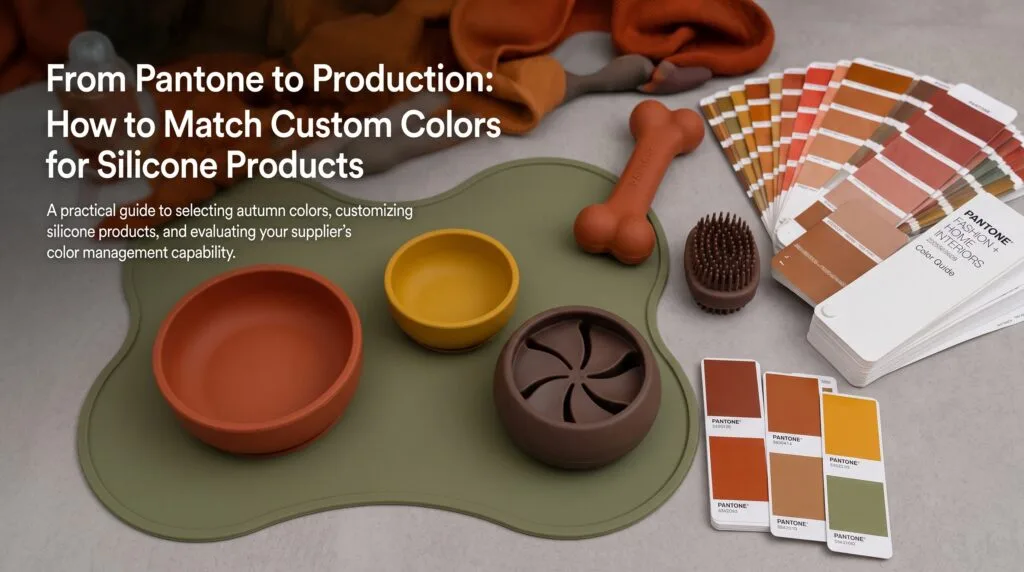
Color is often treated as a design decision, but in product manufacturing it is also a technical and quality-control issue. A brand may select a warm terracotta, muted olive, deep burgundy, or another seasonal shade because it fits the visual identity of a collection. However, that color still has to be translated into a silicone material and reproduced consistently at production scale.
This becomes especially important for B2B buyers ordering private-label or OEM silicone products. A slight difference between the approved sample and the mass-production batch can affect packaging consistency, brand recognition, retail presentation, and customer perception.
This guide explains the complete journey from color selection to production. It also provides a practical framework for evaluating whether a silicone supplier has genuine color-management capabilities rather than simply claiming that it can “match any Pantone color.”
For a customized silicone product, color can be part of the product’s identity. It may distinguish one SKU from another, connect an accessory with a brand’s visual system, or communicate a seasonal merchandising concept.
Consider a retailer launching a fall collection of silicone drinkware accessories. The difference between a generic orange and a carefully selected burnt orange can completely change the perceived quality of the collection. The same applies to silicone cosmetic accessories, pet products, kitchenware, baby products, and promotional merchandise.
For B2B buyers, the goal is not simply “a nice color.”
The goal is a color that can be clearly specified, reproduced, inspected, approved, documented, and repeated in future production.
This is why color should be discussed with the manufacturer during product development, rather than added as a final decoration after the product design has already been approved.
Autumn color palettes are particularly useful for seasonal product development because they can create a strong visual connection with changes in weather, fashion, home décor, gifting, and retail merchandising.
However, B2B buyers should avoid selecting colors only because they look attractive on a computer screen. The better approach is to evaluate the color from three perspectives: brand fit, market relevance, and manufacturing feasibility.
Terracotta, burnt orange, clay, cinnamon, and warm brown can create a handcrafted, premium, and seasonal appearance. These colors can work particularly well for silicone kitchenware, drinkware accessories, storage products, and lifestyle items.
Olive, moss, forest, and muted sage can support outdoor, wellness, sustainable-living, and nature-inspired product positioning. They can also work as a year-round base color with seasonal accents.
Burgundy, wine, brick red, and dark berry shades can create a more premium autumn look. These shades are suitable for cosmetic accessories, fashion-related silicone products, gift products, and branded lifestyle collections.
Beige, oatmeal, cream, taupe, and warm gray provide a quieter alternative. They are useful for brands that want an autumn aesthetic without relying on highly saturated seasonal colors.
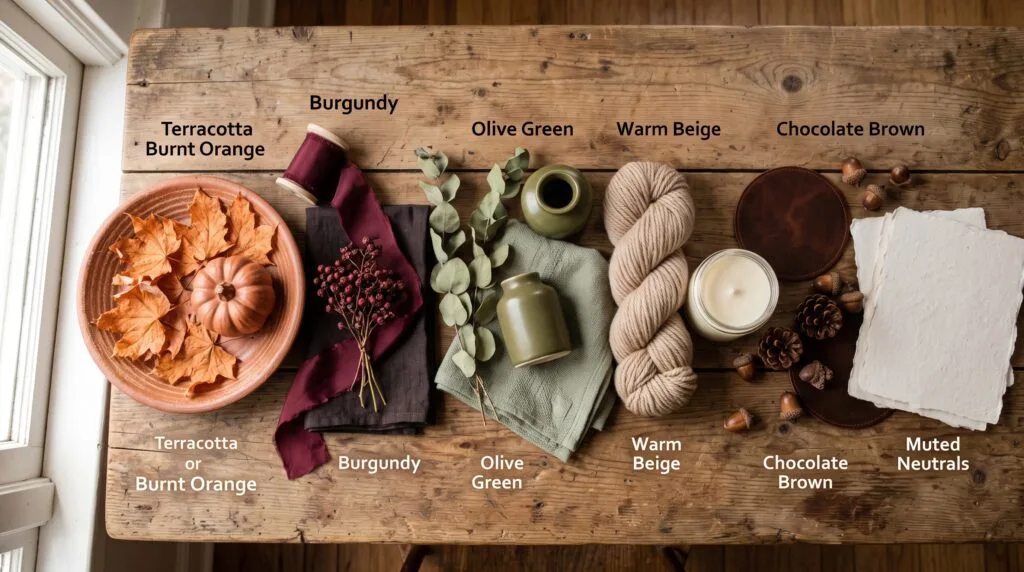
A professional product collection rarely depends on one color alone. Instead, consider building a controlled palette with a primary color, secondary colors, and neutral accents. This makes it easier to create multiple SKUs while keeping the entire collection visually connected.
For example, a fall drinkware accessory collection might combine a deep olive silicone sleeve with a warm beige strap and a burgundy decorative component. The result feels more intentional than simply offering several unrelated colors.
Pantone is widely used as a standardized color reference in product development and manufacturing. For B2B projects, this is valuable because a named color such as “dark green” can be interpreted differently by different people, while a standardized reference provides a much clearer target.
But a Pantone reference should not be treated as a guaranteed physical production formula for every material.
The appearance of a color can change depending on the substrate, surface characteristics, transparency, finish, lighting conditions, pigment system, and production process. Silicone is no exception.
A Pantone number defines the target.
It does not eliminate the need for material-specific sampling, evaluation, and production control.
RGB and HEX values are useful for websites, digital design, and visual communication. They are not, by themselves, reliable physical manufacturing specifications for silicone.
A digital color displayed on one monitor can appear different on another screen. Even if the numerical values are identical, the final silicone product is produced through a completely different physical process.
For this reason, B2B product teams should provide the manufacturer with the most reliable color reference available, preferably supported by a physical reference when color accuracy is commercially important.
In professional color management, CIELAB can be used to describe colors numerically through lightness and chromatic coordinates. Color difference can then be evaluated using a Delta-E value.
The important point for buyers is not to focus on one technical number without context. Instead, ask the supplier how color differences are measured, what reference is used, and how the approved color is controlled during production.
A reliable custom color project should follow a controlled workflow. The exact process will vary according to the silicone material, product design, molding method, surface finish, and color requirements, but the basic logic remains consistent.
Step 01Define the Color TargetPantone reference, physical sample, digital reference, or brand color specification.
Step 02Develop the ColorSelect and formulate the appropriate pigment system for the silicone material.
Step 03Create a SampleProduce a physical silicone sample for visual and technical evaluation.
Step 04Approve the TargetConfirm the sample before proceeding to mass production.
Step 05Prepare ProductionDocument the approved color and manufacturing parameters.
Step 06Mix and MoldIntegrate the color into the silicone production process.
Step 07InspectCheck color consistency and product quality during production.
Step 08Control ReordersRetain the approved reference for future production runs.
The more clearly the target is defined, the easier the project becomes. Ideally, provide a Pantone reference together with a physical sample if the project is highly color-sensitive.
The manufacturer needs to determine how the desired shade should be achieved within the selected silicone material. Pigment concentration, material characteristics, opacity, translucency, and the final surface appearance all need to be considered.
A screen preview is not a substitute for a physical sample. A silicone color chip or product sample allows the buyer to evaluate the actual material rather than an approximation shown through a display.
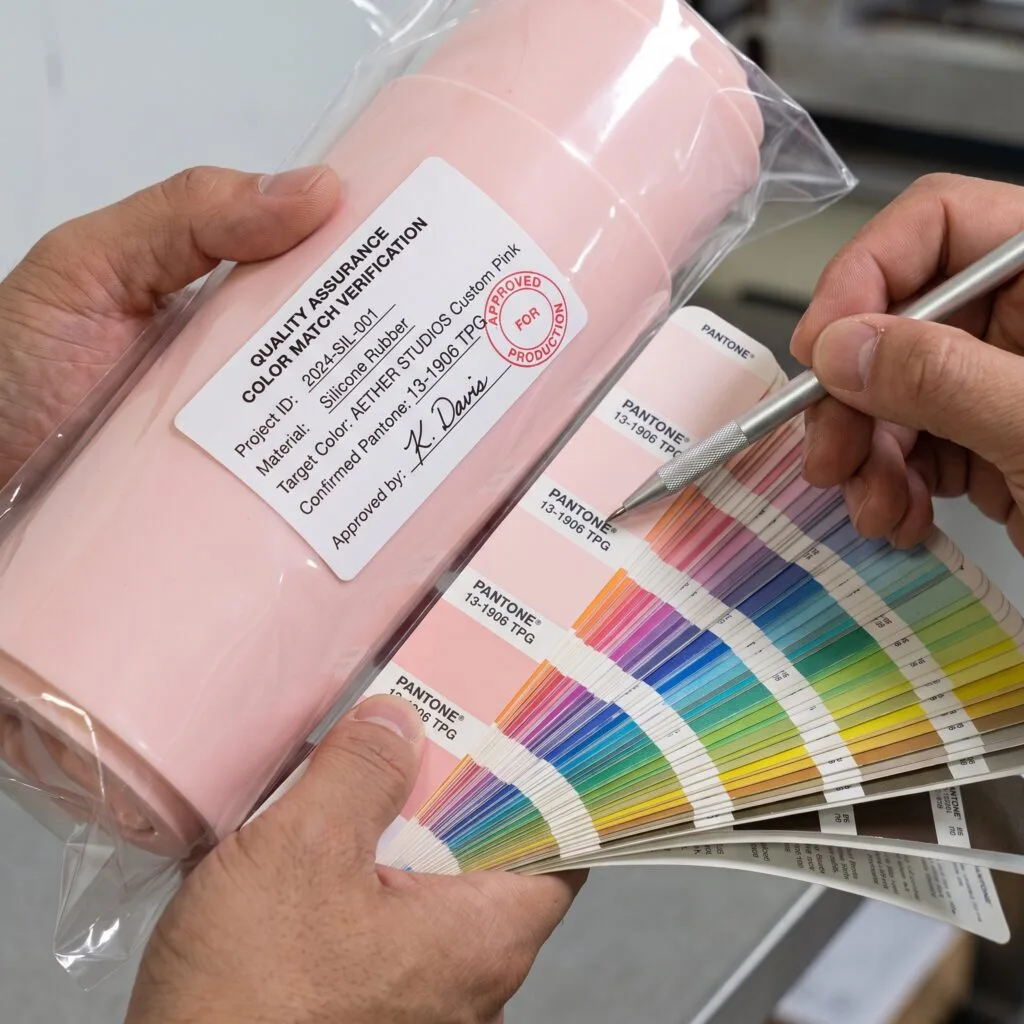
Once the customer approves the sample, the approved reference should become the production target. This is particularly important when the same product will be reordered several months later.
Color management does not stop after sample approval. The manufacturer must maintain control over material preparation, pigment distribution, molding conditions, inspection, and other variables that can influence the finished appearance.
Silicone has characteristics that make it highly useful for consumer products, but those same material characteristics mean that color development needs to be handled carefully.
Different silicone grades and formulations can affect how a pigment appears. A color developed for one material should not automatically be assumed to behave identically in another formulation.
Opaque, translucent, and transparent silicone can produce very different visual effects. A pigment combination that works well for an opaque part may require a different approach when the product needs a translucent appearance.
Matte, glossy, textured, frosted, or specially treated surfaces can change how light is reflected from the product. As a result, the perceived color may change even when the underlying material color is similar.
Color can appear different under daylight, warm indoor lighting, retail lighting, or photography lighting. For critical projects, the approval process should use controlled and consistent viewing conditions.
A supplier may produce a good-looking first batch but still struggle to reproduce the same shade months later. This is one of the most important reasons buyers should evaluate a manufacturer’s color-management system rather than judging only one sample.
| Color Variable | Potential Effect | What Buyers Should Ask |
|---|---|---|
| Silicone Material | Can influence color appearance and transparency. | Is the same material specification maintained? |
| Pigment Concentration | Can change shade intensity and opacity. | How is the color formulation controlled? |
| Surface Finish | Can alter light reflection and perceived color. | Is the approved sample produced with the same finish? |
| Production Conditions | Can contribute to differences between runs. | How are production variables monitored? |
| Lighting | Can change visual perception. | How is visual inspection standardized? |
This is where B2B buyers should look beyond a supplier’s product catalog. A manufacturer can claim “custom colors available” without having a mature system for controlling color throughout development and mass production.
Before placing a large order, evaluate the supplier using the following six areas.
A capable manufacturer should be able to explain what happens after you provide a Pantone number or physical sample. The answer should involve sampling, evaluation, approval, and production control rather than simply “we will mix the color.”
For important brand colors, a physical sample should be part of the approval process. This creates a tangible reference between the buyer and manufacturer before mass production.
Ask how the supplier handles opaque versus translucent silicone, different hardness levels, surface finishes, and different molding processes.
A manufacturer with genuine engineering experience should understand that color cannot be separated from material and process.
Color should be part of the broader quality-control process. Ask how the supplier checks finished products, how samples are retained, and how deviations are handled before shipment.
Geedyn states that production and finished products are inspected by QC before shipment, and its manufacturing workflow includes development, production, QC, and packing stages. This type of structured process is important when a project requires repeatable product quality.
A successful B2B color project should not end with the first shipment. If your product becomes a long-term SKU, you may need the same color again six months or one year later.
Ask whether the manufacturer can preserve the approved color reference and reproduce it consistently for future production.
This question is often overlooked. A mature supplier should have a process for identifying, communicating, correcting, and documenting color deviations.
Supplier evaluation tip: Do not ask only, “Can you make custom colors?” Ask, “How do you control the approved color from the first sample through future production?”
Before approving a silicone supplier, procurement teams can use the following checklist. The purpose is to determine whether the supplier has a repeatable system rather than relying on individual operator experience.
If a supplier can answer these questions clearly and demonstrate the process with actual samples or production records, you have a much stronger basis for evaluating its color management capability.
At Geedyn, custom color development is part of a broader silicone product development process rather than an isolated design service.
Geedyn Technology Co., Ltd. has focused on silicone product manufacturing since 2013. The company operates its own manufacturing base and provides OEM and ODM support for customers developing customized silicone products.
Its capabilities cover product development, mold development, sampling, mass production, quality control, packing, and shipping. This one-stop structure allows color decisions to be considered together with product design, material selection, molding requirements, and production feasibility.
For buyers developing customized silicone products, this matters because the most effective color-management process begins before production. The manufacturer needs to understand what the product is, which silicone material is being used, what surface finish is required, how the product will be molded, and how the approved color will be maintained during production.

Geedyn supports customized silicone products across multiple application categories, including houseware, pet products, jewelry, sports accessories, baby products, and other consumer applications.
If you are developing a seasonal collection, a private-label product, or a new branded silicone accessory, you can explore Geedyn’s silicone product range for product references and customization possibilities.
For projects that require specific molding methods, Geedyn also provides silicone compression molding. This process is suitable for a broad range of customized silicone components and products, while product-specific engineering considerations such as material, hardness, dimensions, shrinkage, tolerances, and parting lines can be reviewed before production.
For products requiring more complex multi-color or three-dimensional effects, silicone dripping injection is another manufacturing option. Geedyn describes this process as supporting customized colored silicone products and multi-color designs.
If your project involves continuous profiles, tubes, cords, seals, or other shaped silicone components, Geedyn also provides silicone extrusion.
Most importantly, buyers can discuss color requirements during the initial product development stage instead of treating color as a final-stage cosmetic decision.
A screenshot is useful for communication, but it should not be treated as the final physical color specification. Screen settings and display technologies can affect what the buyer and manufacturer see.
A Pantone reference is extremely useful for communicating color intent, but the final appearance still depends on the material and manufacturing process.
A sample should represent the actual production material, finish, and construction as closely as possible. Otherwise, the approved appearance may not accurately represent the final product.
If a product is expected to become a permanent SKU, color continuity should be considered from the beginning. Ask how the approved reference will be managed for future orders.
The lowest unit price may not produce the lowest total project cost if inconsistent color leads to rework, rejected goods, delayed launches, or inconsistent retail presentation.
For branded silicone products, the supplier’s ability to manage color should be evaluated alongside tooling, material quality, production capability, QC, lead time, and communication.
Yes. Custom silicone products can be developed around a Pantone reference or another agreed color standard. However, the final physical result should be validated through material-specific sampling because silicone, surface finish, transparency, lighting, and production conditions can affect appearance.
Yes. A physical sample can be useful when the existing product, accessory, or brand component must visually coordinate with the new silicone product. The manufacturer can use it as a development reference and then create a production sample for approval.
Yes, but transparent and translucent products require additional consideration because pigment concentration, material clarity, thickness, and background conditions can affect the perceived color.
Establish an approved physical reference, maintain consistent material and production specifications, and work with a supplier that has a structured QC and color-management process. Future reorders should be compared against the approved production target.
No. Trends are useful for inspiration, but B2B product teams should also consider brand identity, target market, product category, material feasibility, production consistency, and how the color will work across the complete product collection.
Ideally, provide the Pantone reference or physical color sample, product drawings, silicone material requirements, hardness, surface finish, transparency requirements, target quantity, intended application, and any specific color tolerance or approval requirements.
Yes. Geedyn provides silicone OEM and ODM services, including product development, mold development, sampling, mass production, QC, packing, and shipping. Buyers can discuss custom product and color requirements during the development stage.
A successful custom silicone color project is not simply about selecting an attractive shade. It is about creating a clear color target and building a reliable path from design intent to physical production.
For seasonal collections, autumn colors can provide a strong starting point. Warm terracotta, muted olive, deep burgundy, rich brown, and soft neutrals can help create a cohesive visual identity. But the commercial value of those colors depends on whether the manufacturer can reproduce them accurately and consistently.
That is why B2B buyers should evaluate a silicone supplier’s color-management capability before placing a large order. Look for a supplier that can explain its color-development workflow, provide physical samples, understand material-specific behavior, maintain QC procedures, and support consistent future production.
At Geedyn, color customization is considered as part of the complete silicone product development process. From product design and sampling to molding, mass production, inspection, and delivery, the goal is to help brands move from an initial product concept to a production-ready silicone product.
If you are preparing a new autumn collection, developing a private-label silicone product, or need a specific brand color reproduced in silicone, the best time to discuss color management is before production begins.
Have a Pantone color, physical sample, product drawing, or new silicone product concept? Share your requirements with Geedyn’s team and discuss the most suitable material, manufacturing process, color development, sampling, and production solution for your project.Send Your Custom Silicone Inquiry
About Geedyn Silicone
Geedyn Technology Co., Ltd. is a China-based silicone product manufacturer specializing in customized silicone products and OEM/ODM manufacturing. With experience in product development, molding, sampling, mass production, quality control, and global order fulfillment, Geedyn supports brands, wholesalers, retailers, and product developers looking for customized silicone manufacturing solutions.
This article is intended as a practical B2B manufacturing guide. Color results may vary depending on silicone material, pigment formulation, product geometry, surface finish, production conditions, lighting, and other project-specific variables. Final color specifications should be confirmed through physical production samples before mass production.
 Alibaba.com