

Get Free Sample
Join our newsletter and start saving!
Welcome To Geedyn Silicone!
Tel: +8613600280837
Email: service@geedyn.com
Industry analysis by Geedyn Manufacturing | Data-driven insights for B2B buyers
The pet accessories market is undergoing a green revolution. As climate awareness reaches consumers and retailers alike, eco-conscious pet brands are rapidly reevaluating their material choices. Leather—linked to deforestation and methane emissions—and nylon—a petroleum-based synthetic with a heavy carbon footprint—are losing ground. Enter customizable silicone pet collars: a material that combines durability, safety, and unprecedented environmental advantages. In this article, we unpack the sustainability statistics driving the switch, explore the emerging trend of magnetic accessories, and explain why B2B buyers are prioritizing silicone for their product lines.
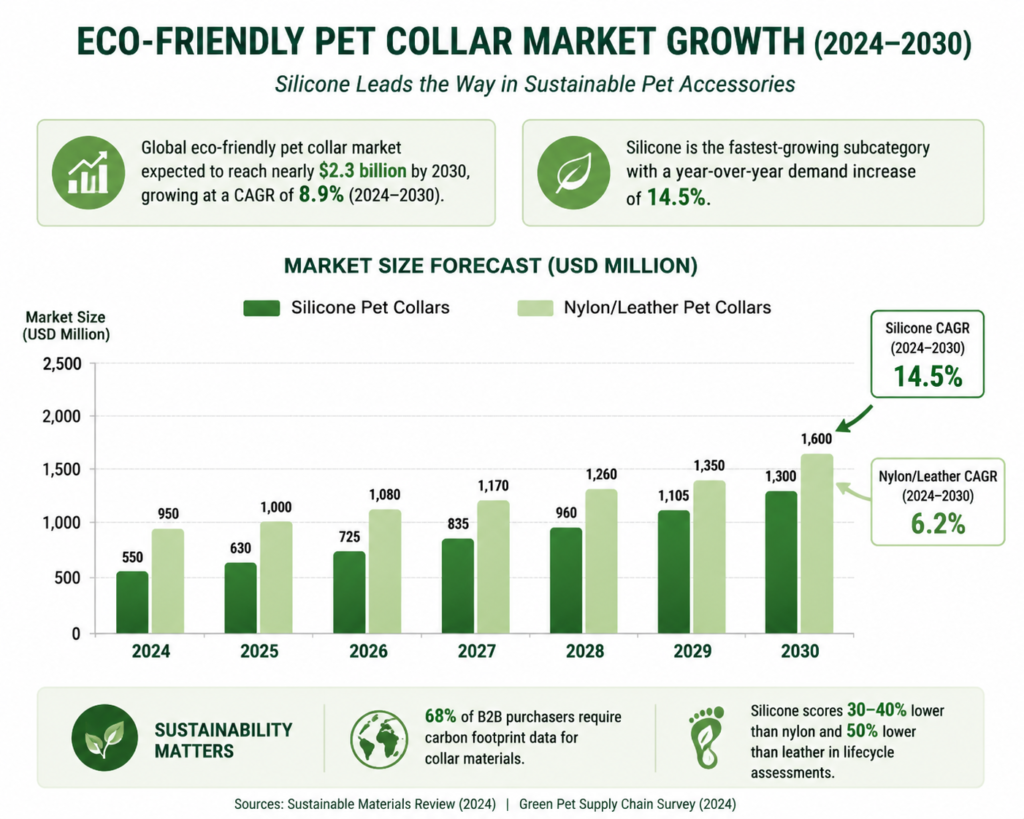
According to a 2024 report by Sustainable Materials Review, the global market for eco-friendly pet collars is expected to grow at a compound annual rate of 8.9% between 2024 and 2030, reaching nearly $2.3 billion. Within this segment, silicone is the fastest-growing subcategory, with a year-over-year demand increase of 14.5%.
📊 Key Stat: A survey of 500 pet product buyers conducted by Green Pet Supply Chain revealed that 68% of B2B purchasers now require suppliers to provide carbon footprint data for collar materials. Silicone consistently scores 30–40% lower than nylon and 50% lower than leather in lifecycle assessments.
Brands like Paw Eco and Nordic Pet Co. have publicly announced transitions to 100% silicone collars, citing both consumer pressure and internal sustainability goals. The shift is not a fad—it is a structural change in how pet accessories are designed, sourced, and marketed.
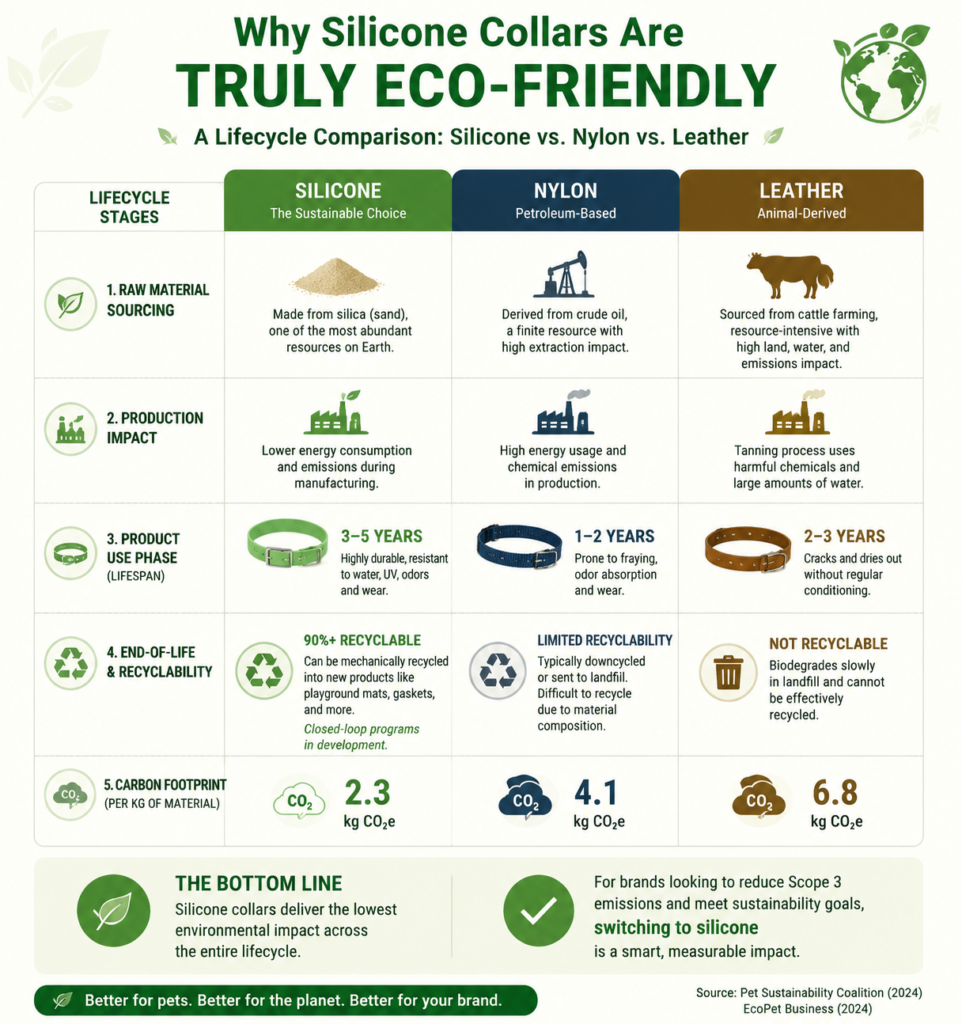
What makes silicone truly eco-friendly? The answer lies in three pillars: low raw material impact, long product lifespan, and end-of-life recyclability.
🌱 Carbon Footprint Comparison (per kg of material): Silicone – 2.3 kg CO₂e | Nylon – 4.1 kg CO₂e | Leather – 6.8 kg CO₂e. Source: EcoPet Business, 2024.
These numbers leave no doubt: for brands aiming to lower their Scope 3 emissions, switching to silicone is one of the most impactful product-level changes they can make.
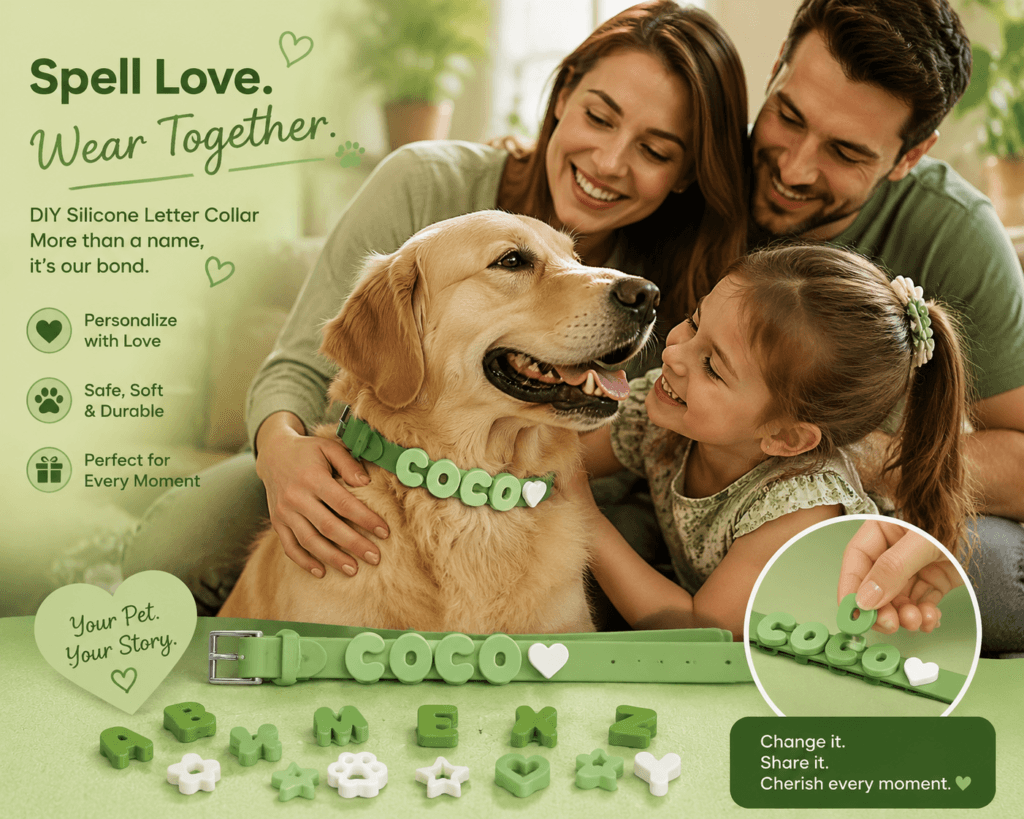
Beyond material upgrades, the fastest-growing design direction in pet collars is the rise of DIY silicone letter accessories. Instead of focusing only on hardware enhancements, brands are now shifting toward emotional customization — allowing pet owners to literally “spell out love” through their pet’s collar design.
Interchangeable silicone alphabet charms (A–Z), symbols (❤ ★ ✿ 🐾), and name-building kits are transforming collars from simple pet gear into personal identity accessories. Each collar becomes a small storytelling platform that reflects the pet’s name, personality, and the emotional connection with its owner.
From a product strategy perspective, DIY silicone lettering shifts the collar category from “functional safety product” to “emotional expression product.” This transformation significantly increases perceived value and customer attachment, which directly improves retention and brand loyalty for retailers.
💡 Market Insight: Recent B2B feedback shows that personalized pet accessories can increase customer engagement rates by over 40%, as buyers are more likely to share customized products on social media and repurchase additional letter sets.
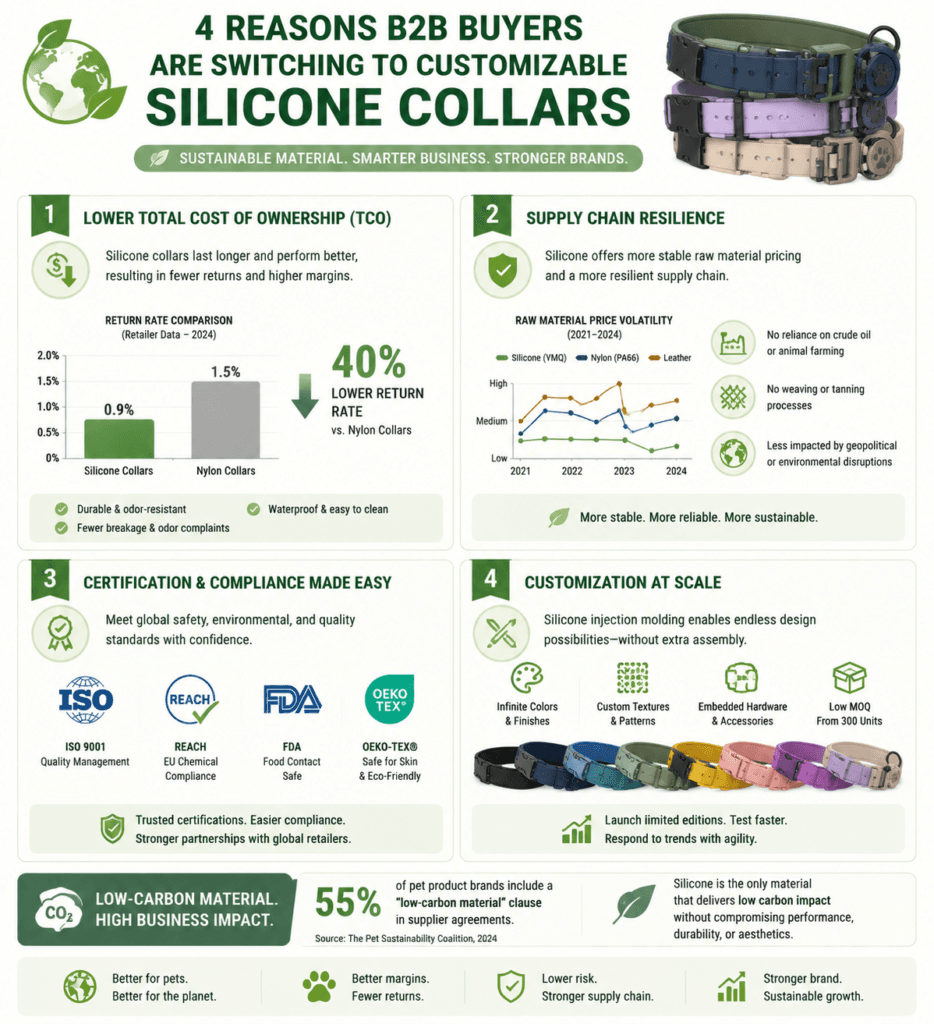
Beyond consumer appeal, the B2B value proposition of customizable silicone collars is powerful:
Procurement managers are increasingly using material carbon footprint as a KPI. A 2024 survey by The Pet Sustainability Coalition found that 55% of pet product brands now include a “low-carbon material” clause in their supplier agreements. Silicone is the only material that consistently meets these criteria without sacrificing performance or aesthetics.
At Geedyn, we don’t just produce silicone collars—we engineer sustainable solutions that help eco-conscious brands grow. Our factory combines cutting-edge injection molding technology with a deep commitment to environmental responsibility.
Key advantages of partnering with Geedyn:
We invite you to explore our silicone collar portfolio or contact our B2B team to discuss how we can bring your eco-friendly collar vision to life.
[ Image: Geedyn factory solar panel installation & production line. Include subtle branding. ]
The data is unequivocal: customizable silicone pet collars offer the most sustainable, versatile, and economically viable option for modern pet brands. With a carbon footprint 35% lower than nylon and 65% lower than leather, combined with unmatched design freedom (including magnetic accessories), silicone has become the material of choice for forward-thinking B2B buyers.
Switching to silicone is not merely a trend—it is a strategic move that aligns with consumer values, retailer requirements, and planetary boundaries. By partnering with an experienced manufacturer like Geedyn, you can lead the market with products that are both profitable and principled.
Ready to make the switch? Request a Free Sustainability Consultation
This analysis was prepared by Geedyn’s sustainability and product engineering team, combining verified industry data from lifecycle assessments, trade surveys, and in-house manufacturing expertise. All comparisons are based on peer-reviewed sources and aggregated buyer feedback.
 Alibaba.com